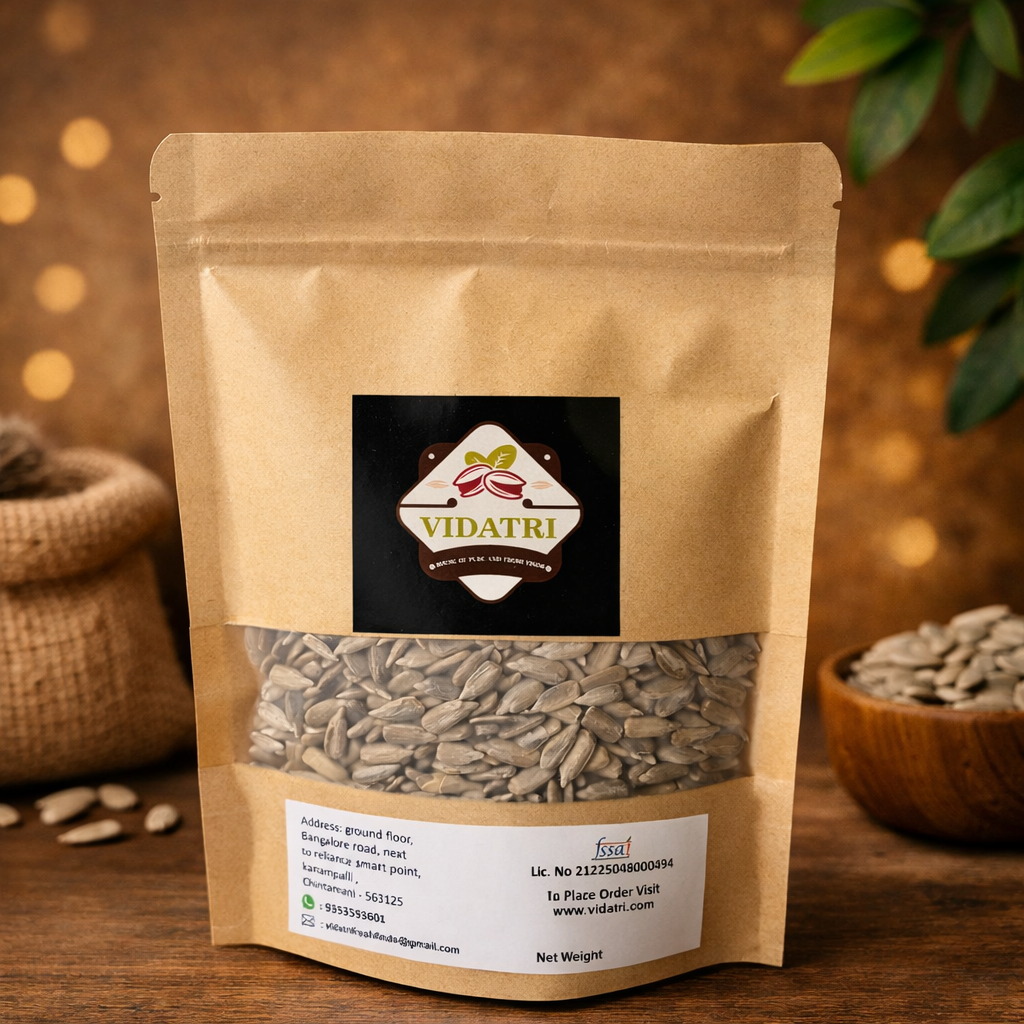
Sunflower seeds come from the large flower head of the sunflower plant (Helianthus annuus), a crop widely cultivated across many parts of the world. After harvesting, the seeds are dried and often roasted, salted, or flavored, though they can also be eaten raw. The outer shell (hull) is usually removed before consumption, revealing the small, soft kernel inside.
Nutritionally, sunflower seeds are considered a nutrient-dense food. They contain high levels of unsaturated fats that support heart health, along with plant-based protein helpful for muscle repair and satiety. One of their standout nutrients is vitamin E, a powerful antioxidant that helps protect cells from oxidative stress and supports skin health. They also provide magnesium, selenium, and B-complex vitamins, which contribute to energy metabolism and nervous system function.
Because of their balanced combination of fats, fiber, and protein, sunflower seeds can help keep you full for longer periods, making them a popular addition to healthy diets. They are frequently used in trail mixes, salads, baked goods, granola, and seed butters, or simply eaten as a standalone snack.
Beyond nutrition, sunflower seeds have culinary versatility and long shelf life, which makes them a convenient pantry staple. When consumed in moderation (especially salted varieties due to sodium content), they can be part of a balanced diet supporting overall wellness.
Reviews
There are no reviews yet.